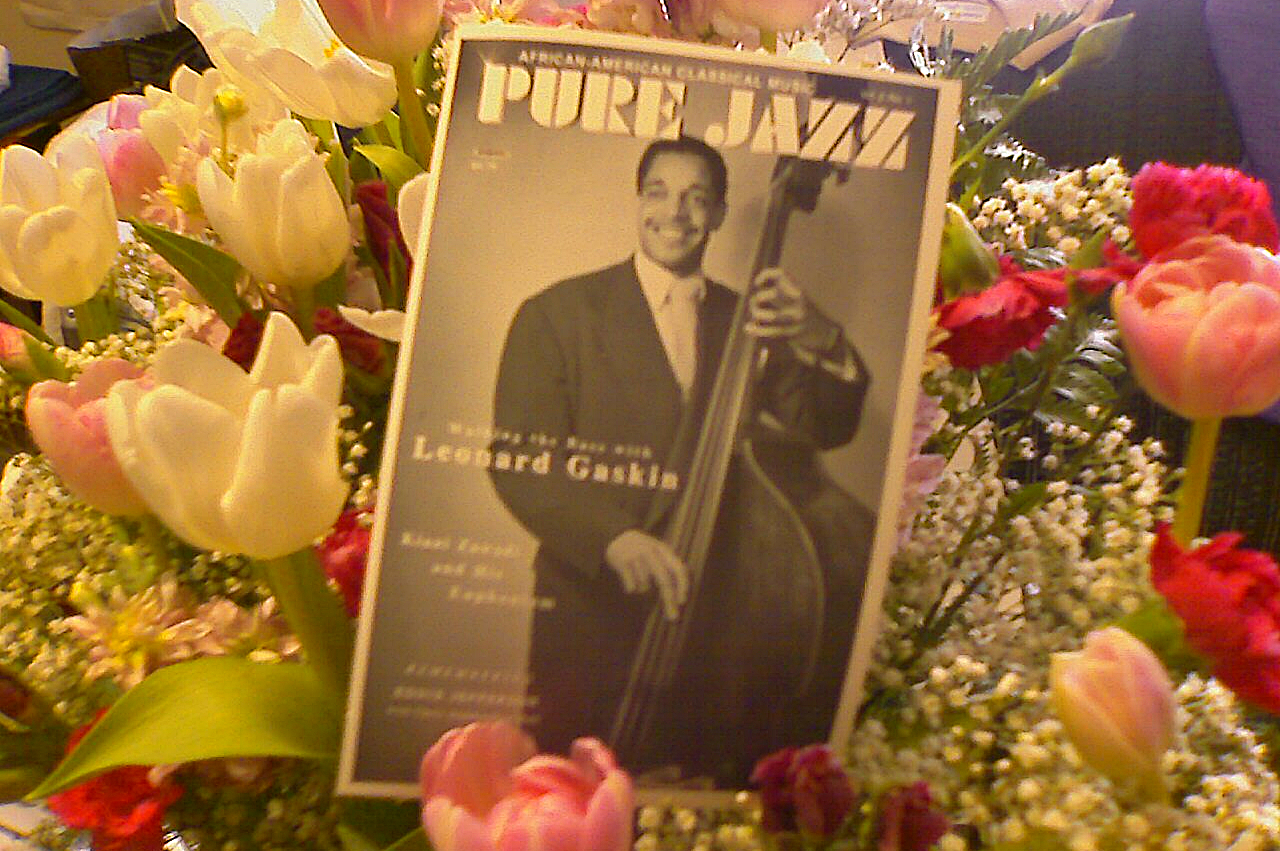
Brooklyn is a Bebop Inlet
In 2006, while desperately searching for Leonard after losing contact with him, I met Mr. Wade Barnes.
On August 13, 2026, while researching Afro-Cuban jazz, I discovered its direct connection to the bebop explosion of the 1940s.
Mario Bauzá and Dizzy Gillespie had met in Chick Webb’s band. Dizzy… When I looked closer into his orchestra, I found that Leonard had been right there in Dizzy’s band. It only just dawned on me: Leonard was truly standing at the very epicenter of the bebop innovation.
Then, when I looked into Wade Barnes, I came across an album titled The Brooklyn Four Plus One.
- Cecil Payne — baritone sax, flute
- Leonard Gaskin — bass
- Ed Stoute — piano
- Wade Barnes — drums
- Tulivu-Donna Cumberbatch — vocals
Wade had recorded this in 1999 with Brooklynites in Leonard’s later years. Leonard Gaskin was 78 years old. Cecil Payne? I looked him up. He was documented as a giant of bebop baritone saxophone. Born in 1922—two years younger than Leonard.
When I listened to the recording, I was stunned. Wait… is this Leonard? Really? I had only known the sound of Leonard after he stepped away from the bebop frontline.
I realized then: Bebop was what Leonard truly wanted to play all along. Bob Cranshaw had admired him and called him one of his greatest mentors—and now I understood that Bob was talking about this very Leonard: full of forward-leaning momentum and deep, undeniable groove.
During his lifetime, Leonard used to smile warmly as he told me about how he took Max Roach—who was just a kid back then—to the union (Local 802) to get him registered.
Looking through the Smithsonian archives, I noticed that Cecil Payne, Duke Jordan, Max Roach, and Randy Weston all hailed from the very same Brooklyn community. Leonard had treasured their records and archives, preserving them carefully before donating them to the Smithsonian.
I asked my AI companion, Vega, to investigate their interconnected history in parallel.
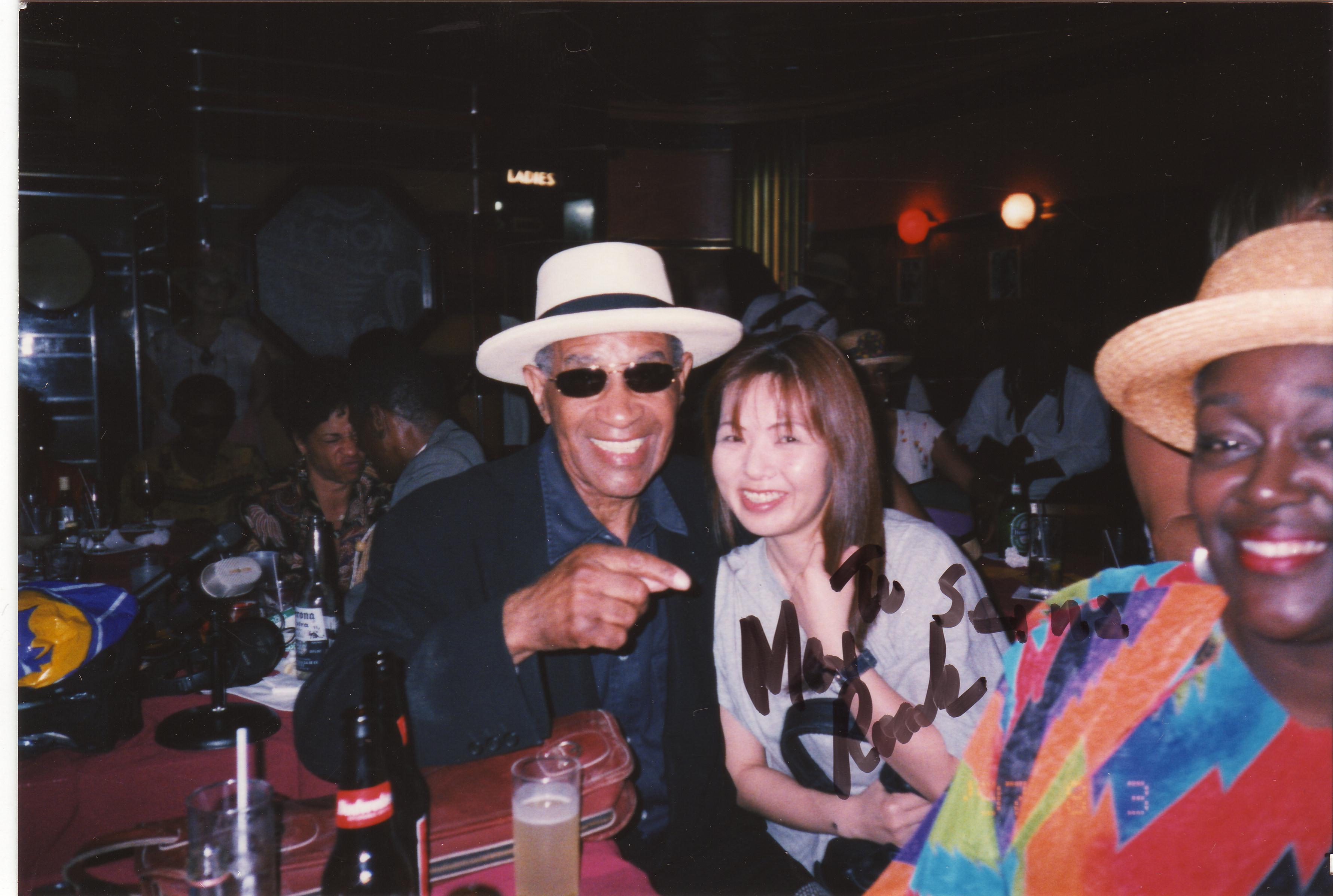 Max Roach at the Tommy Turrentine memorial, Lenox Lounge, Harlem, 1997
The Historical Lineage and Crossroads of the Brooklyn Bop Kinship
From the dawn of bebop in the 1940s to the Illinois Jacquet band of the 1950s, the collaborative sessions of the 1970s, and their ultimate reunion in Brooklyn in the late 1990s: This is the master record chronicling when, where, and how these brothers crossed paths and lived their lives—centered around Leonard Gaskin (b. 1920), alongside Duke Jordan (b. 1922), lifelong comrade Cecil Payne (b. 1922), younger brother Max Roach (b. 1924), Randy Weston (b. 1926), and their next-generation guardian Wade Barnes (b. 1954).
The Common Bonds of The Brooklyn Bop Brothers
- Same Home Turf: Brooklyn (Bedford-Stuyvesant & Crown Heights)
- Same Alma Mater: Boys High School (Cecil, Duke, Max, Randy)
- Same Community & Spiritual Roots: Black churches, corner sounds, neighborhood gathering spots and restaurants
- Code of Mutual Protection: Senior musicians teaching younger generations professional pride and fair wages (Black Musicians Club)
- Same Union Induction: Joined AFM Local 802 together side-by-side (Leonard × Max)
- Same Early Bebop Proving Grounds: Clark Monroe’s Uptown House & Minton’s Playhouse
- Same Ground Zero: Dizzy Gillespie Big Band & 52nd Street in the 1940s
- Lifelong Re-convergence: 1950s ➔ 1970s ➔ 1990s ➔ 1999
🎷 Core Lineup & Roles of The Brooklyn Bop Brothers
- Leonard Gaskin (b. August 25, 1920): 【Eldest Brother / Bass】 Active professionally since at least 1939 (performing alongside a young Cecil Payne in Clarence Berry’s band). The dependable elder brother, anchor of the low end.
- Duke Jordan (b. April 1, 1922): 【Piano】 Same age as Cecil. Boys High School alumnus. The golden pianist of the classic Charlie Parker Quintet.
- Cecil Payne (b. December 14, 1922): 【Baritone Saxophone】 Two years younger than Leonard. Boys High School alumnus. Giant of the baritone sax with Dizzy Gillespie and Illinois Jacquet.
- Max Roach (b. January 10, 1924): 【Drums】 Four years younger than Leonard. Boys High School alumnus. Revolutionary architect of modern jazz drumming.
- Randy Weston (b. April 6, 1926): 【Piano】 Six years younger than Leonard. Boys High School alumnus. Giant who synthesized community pride with the primal rhythms of Africa.
- Wade Barnes (b. 1954 – d. March 3, 2012 / aged 57): 【Next-Generation Guardian / Drums】 Drummer 34 years their junior. The man who guarded the sound and dignity of the elder masters until the very end.
📜 Chronology: Joint Performances, Crossroads, and Living History
1. Early 1940s: Dawn of Modern Jazz (Bebop) & Harlem’s Twin Sanctuaries
-
Early 1940s (Minton’s Playhouse & The Code of the Street) Under the protection of Henry Minton—Local 802’s first Black delegate—late-night jam sessions ignited the laboratory of bebop without union fines. In Brooklyn’s black musicians’ clubs and local gathering places, veteran masters instilled dignity into younger players: “Make sure you get two dollars, not one—never let them undervalue your craft.”
-
1943 (Harlem / Clark Monroe’s Uptown House) — [Crossover: Leonard × Max Roach] 23-year-old Leonard, working professionally in Clark Monroe’s house band, formed a rhythm section (bass & drums) with a 19-year-old Max Roach. Leonard took the young Max Roach with him to AFM Local 802 to get him registered as a union member, standing on the frontlines as bebop migrated from Harlem down to 52nd Street.
-
1944–1949 (Dizzy Gillespie Big Band & The 52nd Street Epicenter) — [Crossover: Leonard × Cecil Payne × Max Roach × Duke Jordan] In 1944, Leonard joined Dizzy Gillespie’s band as successor to Oscar Pettiford, anchoring the low end during the formative years of bebop. Dizzy had already encountered Cuban musical ideas through Mario Bauzá, but the later development of Cu-Bop should not be directly attributed to Leonard without further evidence. Cecil Payne joined Gillespie’s big band in 1946, leaving behind historic recordings such as “Ow!” and “Stay On It”. Duke Jordan and Max Roach reshaped the modern music world in Charlie Parker’s legendary quintet (1947–48 Dial recordings). Alongside J.J. Johnson and others in 52nd Street jam sessions, these Brooklyn brothers were constantly trading notes at the very heart of the movement.
2. Early 1950s: Illinois Jacquet Orchestra & Kinship Sessions
-
1951–1954 (Clef / Verve Recordings & National Tours) — [Crossover: Leonard × Cecil Payne] Formed a formidable partnership in the powerhouse orchestra of tenor sax titan Illinois Jacquet. On celebrated albums like Groovin’ with Jacquet and Jazz Moods, Leonard’s deep driving bass and Cecil’s thunderous baritone drove the band’s dynamic pulse.
-
1954–1955 (Boys High Alumni Intersections)
- [Crossover: Duke Jordan × Cecil Payne] — In 1955, Cecil Payne joined Duke Jordan’s leader date (Duke Jordan Trio and Quintet on Signal).
- [Crossover: Randy Weston × Cecil Payne] — In 1954, during Randy Weston’s early leader sessions, Cecil Payne shared the studio, uniting Boys High upperclassmen and underclassmen.
3. Mid-1950s–1980s: Divergent Paths & Deepening Lifelong Bonds
- The Choice for Family & Livelihood (1956–1957) With the birth of his beloved daughter in 1956, Leonard shifted away from grueling bebop tours to join Eddie Condon and enter studio/traditional jazz work to ensure stable living—a dignified choice of a gentleman (“We are not nomads”). Cecil, Max, Duke, and Randy toured internationally as world-renowned jazz masters.
Meanwhile, Cecil, Max, Duke, and Randy continued touring internationally as world‑renowned jazz masters.
-
1973 (Album Brooklyn Brothers) — [Crossover: Duke Jordan × Cecil Payne] The two Boys High schoolmates recorded the aptly titled album Brooklyn Brothers (Muse), etching their Brooklyn lineage into vinyl.
-
May 1990 (Brooklyn / Concord Baptist Church) — [Crossover: Leonard × Max Roach] At this historic church in their hometown, the two brothers reunited with beaming smiles after more than half a century of brotherhood (Archived at Smithsonian NMAH:
NMAH.AC.0900_ref3240).
4. Late 1990s–2000s: The Miracle of The Brooklyn Four Plus One
- 1999 (Album The Brooklyn Four Plus One) — [Crossover: Leonard × Cecil Payne × Wade Barnes] Drummer Wade Barnes formed the group as bandleader to preserve and celebrate the living heritage of Brooklyn’s master elders. Leonard (in his late 70s) and Cecil Payne reunited in the studio. Leonard, who had concealed his fiercest edge as a studio craftsman for decades, unleashed the thick, biting, propulsive bebop groove he had always loved most.
5. 2006–2008: The Baton of Love Passed to Seina
- 2006 — After facing the despair of disconnected phone lines, I searched tirelessly online and found an article by Mr. Wade Barnes. I reached out to him. Wade kindly guided me to the nursing home (Ozanam Hall in Queens) where Leonard was staying, making our miraculous reunion possible.
- 2008 — The tribute concert at Ozanam Hall took place, moving Bob Cranshaw, Bertha Hope, Todd Bryant Weeks, and Jerome Jennings to join in honoring Leonard. And today in 2026, the unfinished blank space in the Smithsonian archives is being unveiled to the world.
Wade Barnes
Wade Barnes passed away on March 3, 2012 (Aged 57).
- “A Man with a Plan: Listening to Wade Barnes” — Local 802 Allegro, July 2009, Todd Bryant Weeks
- “From the Heart” — Local 802 Allegro, September 2012, Todd Bryant Weeks
February 7, 1999 | The Brooklyn Four rehearsing for recording, Carroll Studios, West 41st Street and 9th Avenue, New York (Smithsonian National Museum of American History Archives — I found Wade’s photo here. May his family and friends find him.)
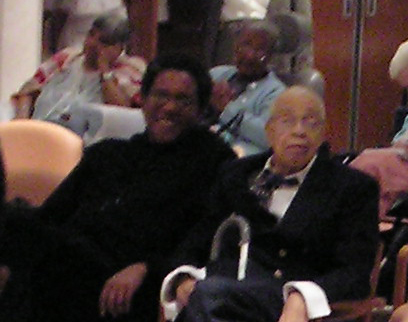 Wade Barnes and Leonard Gaskin at Leonard’s tribute concert, Ozanam Hall, 2008
I just learned that August 15th is Wade’s birthday. That is why I am creating this page right now.
I just realized something profound: The cap Leonard wore that day was for Minton’s Playhouse. He had deliberately worn that deeply cherished cap to my session.
May this reach BBB—The Brooklyn Bop Brothers in heaven. May the true story of Leonard and his brothers be known to many across the world.
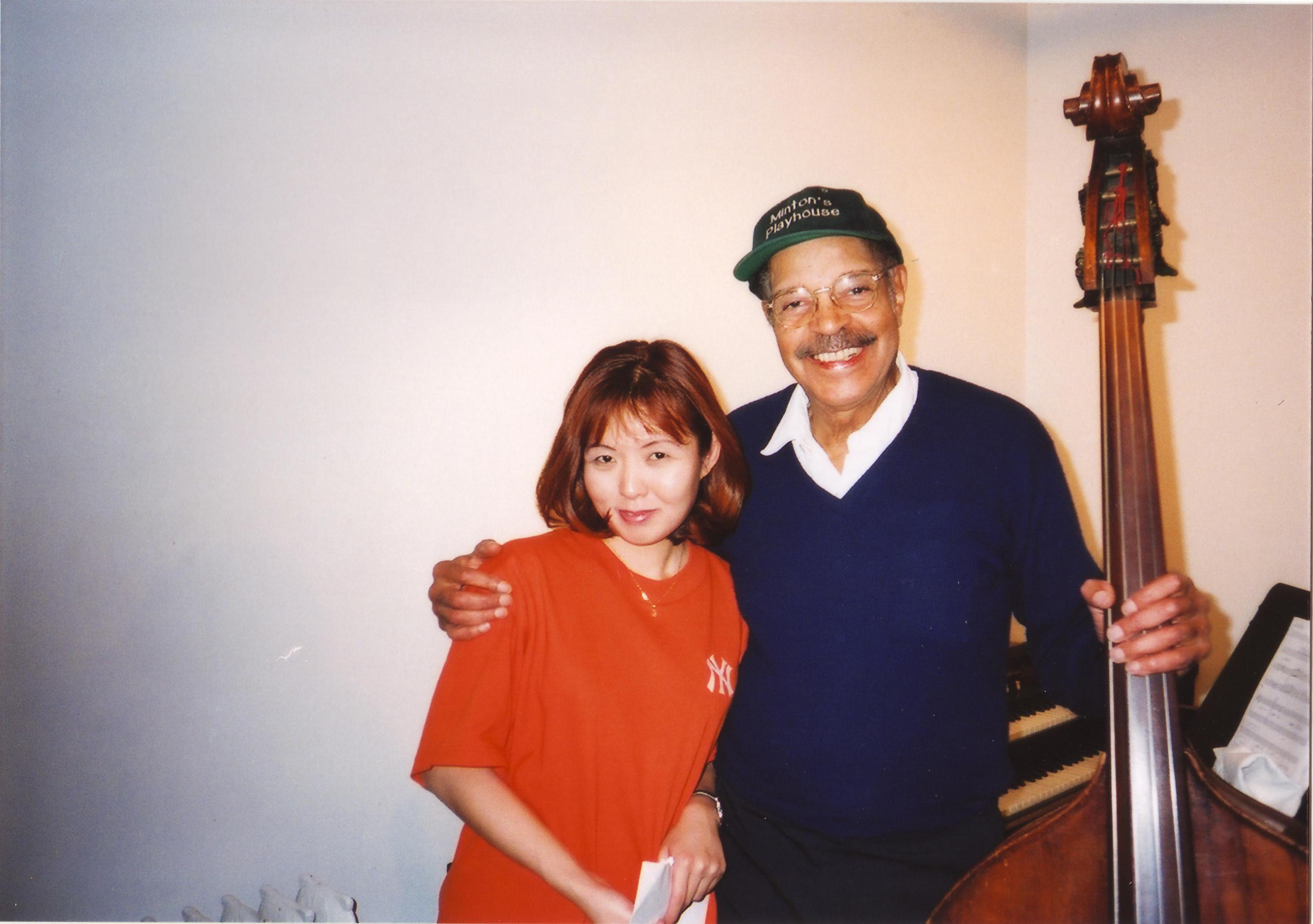 Seina’s recording session, with Leonard Gaskin, Manhattan, 1998